
France–Spain Border Guide: Crossing the Pyrenees Between Two Countries
The France–Spain border stretches for more than 650 kilometers across the Pyrenees Mountains, connecting the Iberian Peninsula with the rest of Europe.
For many travelers, the border is simply crossed without a second thought. However, this frontier is far more than a line on a map. It passes through mountain landscapes, historic routes, coastal crossings, and even one of Europe’s smallest countries: Andorra.
Whether you are planning a road trip, visiting the Pyrenees, exploring Andorra, or simply wondering how border crossings work between France and Spain, this guide explains the geography, major routes, and practical information travelers should know.
Is There Border Control Between France and Spain?
France and Spain are both members of the Schengen Area, which allows free movement between participating countries.
In normal circumstances, travelers can cross the border without passport checks, customs inspections, or formal border controls. Most crossings are marked only by road signs indicating that you have entered another country.
However, travelers should always carry a valid passport or national identity document, as temporary controls may occasionally be introduced for security or special events.
For most visitors, crossing between France and Spain feels no different from driving between regions within the same country.
The Pyrenees: The Natural Border Between France and Spain
SLong before modern national borders existed, the Pyrenees formed a natural barrier separating the Iberian Peninsula from the rest of Europe.
Stretching from the Atlantic Ocean to the Mediterranean Sea, the mountain range has shaped trade, migration, culture, language, and history for centuries.
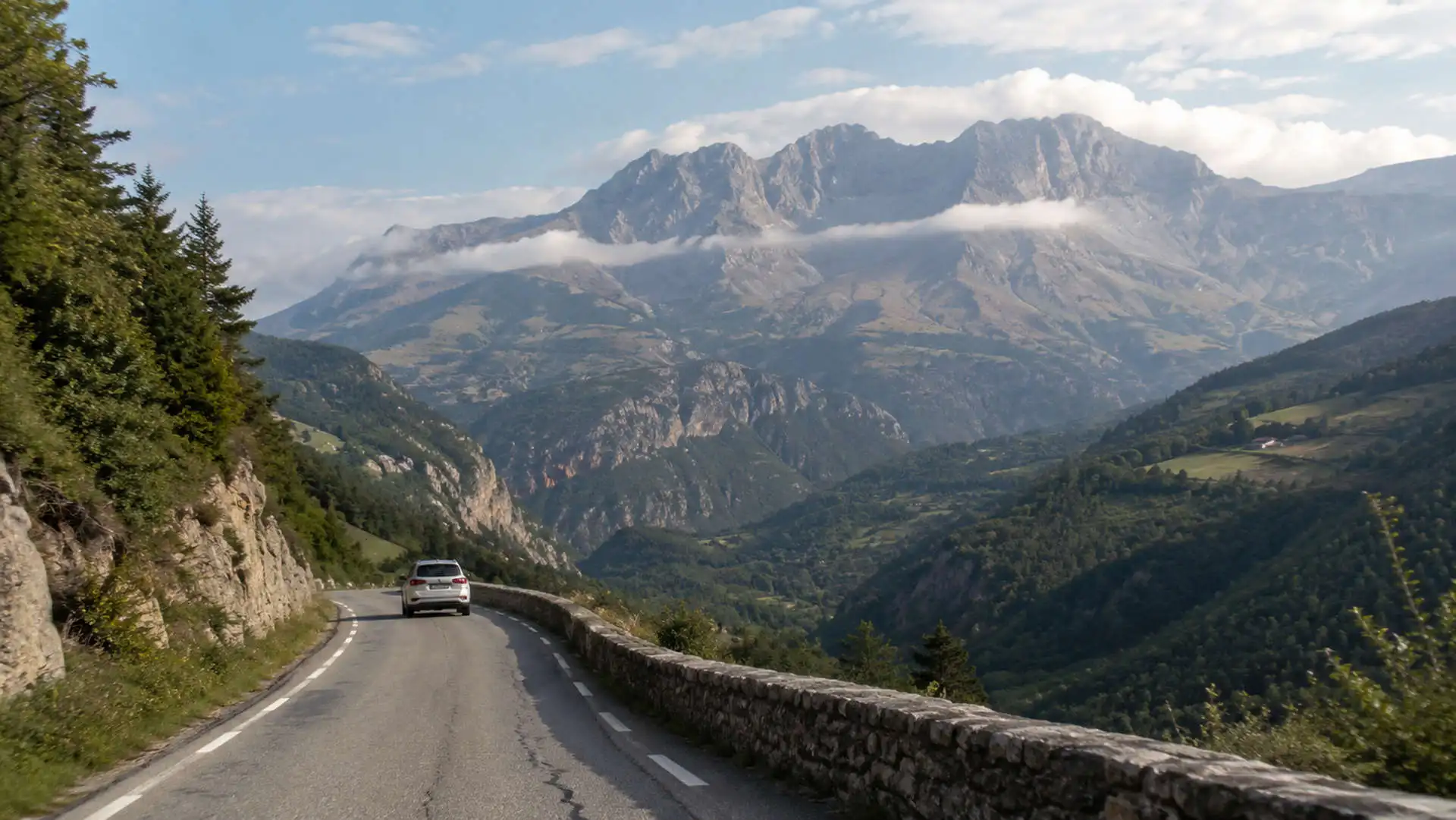
Today, the Pyrenees remain one of Europe’s most scenic mountain regions. Travelers crossing the border often encounter dramatic valleys, mountain passes, forests, rivers, and traditional villages that have changed little over generations.
The border itself largely follows the crest of the mountain range, making many crossings some of the most scenic drives in southern Europe.
Main France–Spain Border Crossings
The France–Spain border can be crossed in several different regions, each offering a different experience.
Eastern Pyrenees
Near the Mediterranean coast, the border passes through Catalonia and the French department of Pyrénées-Orientales.
Popular locations include:
- Portbou
- Cerbère
- Collioure
- Perpignan
This area combines coastal scenery, vineyards, historic railway connections, and easy access to both Barcelona and southern France.
Central Pyrenees
The central section contains some of the highest mountains and most spectacular landscapes along the border.
Key routes include:
- N20 (France)
- N22 (France)
- CG roads in Andorra
This route is particularly popular because it passes through Andorra, allowing travelers to cross between France and Spain while visiting a third country.
Western Pyrenees
Near the Atlantic coast, the border passes through the Basque Country.
Important crossings include:
- Irun
- Hendaye
- San Sebastián region
This area is known for its coastal landscapes, gastronomy, and strong Basque cultural identity on both sides of the border.
France, Spain and Andorra: Three Countries Connected by the Pyrenees
One of the most unique aspects of the France–Spain border is the presence of Andorra.
Located high in the Pyrenees between the two countries, Andorra is an independent microstate that has maintained its autonomy for centuries.
Although Andorra is not a member of the European Union, it maintains open borders with both France and Spain, making travel straightforward for visitors.
Many travelers crossing the central Pyrenees choose to enter Andorra from France before continuing into Spain. This route combines mountain scenery, historic villages, panoramic viewpoints, and access to one of Europe’s highest capital cities.
For visitors interested in experiencing multiple countries in a single journey, the France–Andorra–Spain route is one of the most rewarding drives in the region.
To learn more about the country, attractions, border crossings, and practical travel information, see our Andorra Travel Guide.
Historic Border Crossings During World War II
The France–Spain border played a significant role during the Second World War.
Thousands of refugees, Allied airmen, resistance members, and civilians crossed the Pyrenees to escape occupied Europe.
Many of these journeys followed remote mountain routes through valleys and high passes that were difficult to monitor.
Today, several historic escape routes remain accessible and help explain why the Pyrenees continue to hold such historical significance.
Visitors interested in this remarkable history can learn more in our guide to WWII Escape Routes Over the Pyrenees, which explains how refugees and Allied personnel crossed the mountains between France, Spain, and Andorra during the war.
Towns and Places Worth Visiting Along the Border
The border region contains some of the most attractive destinations in both France and Spain.
Notable locations include:
On the Spanish Side
- Portbou
- Cadaqués
- Girona
- Benasque
- Vielha
- San Sebastián
On the French Side
- Collioure
- Ax-les-Thermes
- Saint-Jean-Pied-de-Port
- Cauterets
- Lourdes
These towns offer a combination of mountain scenery, local culture, gastronomy, architecture, and outdoor activities.
Visiting the France–Spain Border from Barcelona
Barcelona provides one of the easiest starting points for exploring the eastern Pyrenees and the France–Spain border region.
Depending on the route chosen, travelers can reach mountain landscapes, border towns, and Andorra within a few hours.
Many visitors combine:
- Spain
- France
- Andorra
within a single day, allowing them to experience different cultures, languages, landscapes, and traditions without changing accommodation.
The route through the eastern Pyrenees is particularly popular because it combines mountain scenery, border crossings, historic villages, and access to Andorra.
Exploring the France–Spain Border from Barcelona
The France–Spain border is much more than a political boundary. It follows the Pyrenees Mountains, connects distinct cultures, and passes through some of the most scenic landscapes in southwestern Europe.
For travelers interested in experiencing the border region firsthand, a day trip from Barcelona can include mountain roads, historic towns, Andorra, and crossings between Spain and France in a single journey.
Explore the Andorra Tour